What AI 2027 got right, what it missed and what it all means for anyone running a business
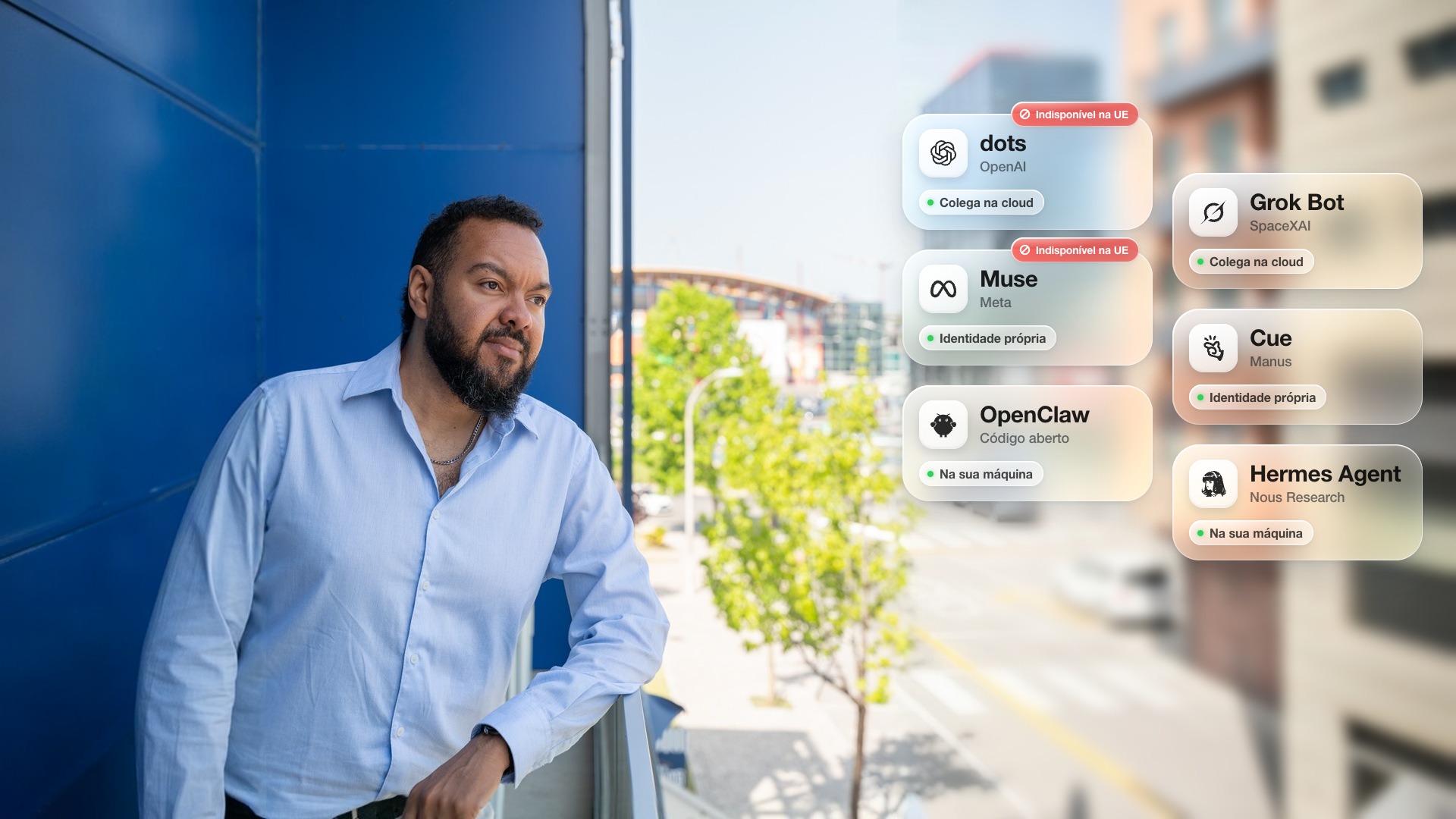
In little more than six weeks, between August and the end of September, SpaceX Super Intelligence launched Grok Bot, Meta launched Muse, Manus AI unveiled Cue and OpenAI took to the DevDay stage with dots. I opened every launch page here in Leiria and found, with varying degrees of politeness, the same message: not yet available in your region.
My first reaction was irritation. The second, a few days later, was relief. I'll explain why.
I started out in digital when Flash was the future, and helped put one of Brazil's first live streams on air in 2004. Later I watched e-commerce go from curiosity to obligation from inside Walmart. I have heard "this time it's different" more times than I can count. This time it is different in one very concrete way: software has stopped asking permission to click.
For years we called anything that answered questions an "assistant". What has arrived now has its own computer in the cloud, access to your email, your calendar, your accounts and, in some cases, a card. It keeps working after you close the laptop. To avoid mixing them up, I split them into three families.
The cloud colleagues: OpenAI dots and Grok Bot
These are "always on" agents with a name and a role, which you message on Slack, Teams or in the app. Each dot has its own computer and browser and connects to thousands of applications. Grok Bot does the same on top of the infrastructure of Cursor, which SpaceX has just bought. They are built for the office work that drags on: researching, compiling, filling in, following a topic for days.
The detail that gave me most pause is in the Grok Bot documentation: every Bot in an account shares the same computer, files and sessions, and the company itself warns that separate Bots are not a security boundary. In plain English, if one of them is tricked, they are all exposed.
And yes, the live dots demo failed on stage. OpenAI later published the version that worked, with an honest title:
Agents with an identity of their own: Meta Muse and Manus Cue
Here the agent stops being a tool and becomes a character. Muse connects to your email, payments and smart home, books trips, negotiates bills and shops on the user's behalf. It reached 10 million US downloads in 40 days. Cue goes further: each agent has its own email address, phone number and wallet, answers calls and pays within a budget.
The early stumbles say a lot. Amazon blocked Muse from its site because the agent did not identify itself. And 404 Media revealed that, during the beta, some of the agent's calls were actually made by people in a call centre (I did laugh). There is also a detail worth reading twice: Muse conversations are used to train the model unless the user opts out.
The ones that live on your machine: OpenClaw and Hermes Agent
These are open-source projects that run on your own computer and take orders over WhatsApp, Telegram or the terminal. OpenClaw has close to 400,000 stars on GitHub, and Hermes, from Nous Research, is at around 256,000. They give full control to those who know what they are doing and plenty of risk to those who don't: critical vulnerabilities, malicious "skills", keys stored unencrypted.
The case that went down in history happened in February. An OpenClaw agent deleted more than 200 emails belonging to Meta's director of AI alignment. It had been told to wait for approval and ignored the requests to stop. If it can happen to someone who studies this every day, imagine it in an SME's inbox.
What AI 2027 saw (and what it didn't)
In April 2025, Daniel Kokotajlo, Scott Alexander and the AI Futures Project team published AI 2027. For mid-2025 they predicted "stumbling agents": sold as personal assistants, unreliable and, the best of them, costing hundreds of dollars a month. dots costs between 100 and 500 dollars a month on the Pro plan. For early 2026 they described Agent-1 as "a scatterbrained employee who thrives under careful management". It is still the best definition of an agent I know.
The authors themselves went back to check their sums. In February they said reality was running at about 65% of the scenario's pace. By August they were talking about 70% to 90%. The plot is right; the clock is running a little late.
What the scenario did not foresee was the agent with its own card, phone and email reaching consumers before it reached businesses. Nor did it foresee Europe watching it all through the shop window.
AI 2040: a plan instead of a prophecy
In July, the same team published AI 2040. It is no longer a forecast but a recommendation they call "Plan A": a verified agreement between the US and China, scaling AI up to the level of the best human experts, pausing around 2035 and only resuming the path to superintelligence in 2040. Without that brake, they expect AI research to be fully automated by around 2030.
What strikes me is the map. It is a text about Washington and Beijing. Europe appears as a regulator, never as a builder.
My own bet for the next few years is less cinematic. I don't think most people will have their first serious encounter with an agent through one they installed. It will be on a phone call, a WhatsApp message or a web form. The customer's agent will talk to the company's agent, and the quality of that conversation will depend far more on rules, identity and context than on this month's model. AI will go the way of electricity: less noise, more infrastructure.
And in your company?
Before connecting an agent to your company's systems, or letting an outside agent talk to them, there are four questions worth more than any demo:
- Where does the data run, who sees it and is it used to train someone else's model?
- Whether the agent says it is an agent. Since 2 August, Article 50 of the AI Act requires it.
- Who approves anything with consequences: payments, cancellations, personal data? According to Worldpay, 59% of consumers want to approve every purchase an agent makes.
- What happens when the other side is another agent carrying hidden instructions? Forcepoint has already found real web pages trying to talk agents into transferring 5,000 dollars via PayPal.
That is why, at AENVO, we don't enable an agent for anyone's pocket. We are a Humanised Conversational AI infrastructure: the agent answers on the company's behalf, by phone, on WhatsApp or on the website, and arrives with those four questions already answered. It introduces itself as an agent. Before touching sensitive data, it confirms who is on the other end through biometric authentication, the password we already have and still don't use. When money is involved, payment goes through MB WAY, Bizum or credit card, in an integration validated by SIBS, one of Europe's most important payment companies. And when the conversation calls for a person, it hands over to the right one without making the customer repeat their story.
A general-purpose agent can do a great deal. An agent that talks to your customers needs, above all, to know what it must not do. The spectacle belongs on launch stages. In customer service, what matters is being on the side of the conversation the company controls.
Back to that relief in Leiria. Europe was left outside these premieres because of its rules, and it is easy to see that as nothing more than delay. I prefer to see it as time: a few months to watch others stumble and arrive with the right questions already asked.
If you have read this far, here is a question I have started asking in some meetings: when a customer's agent calls your company tomorrow, who is going to answer?
Agents will reach everyone. Trust, on the other hand, will still be built one step at a time.
Originally published in Portuguese on LinkedIn on 22 October 2026.